Why Every Business Needs an Animated Explainer Video in 2026
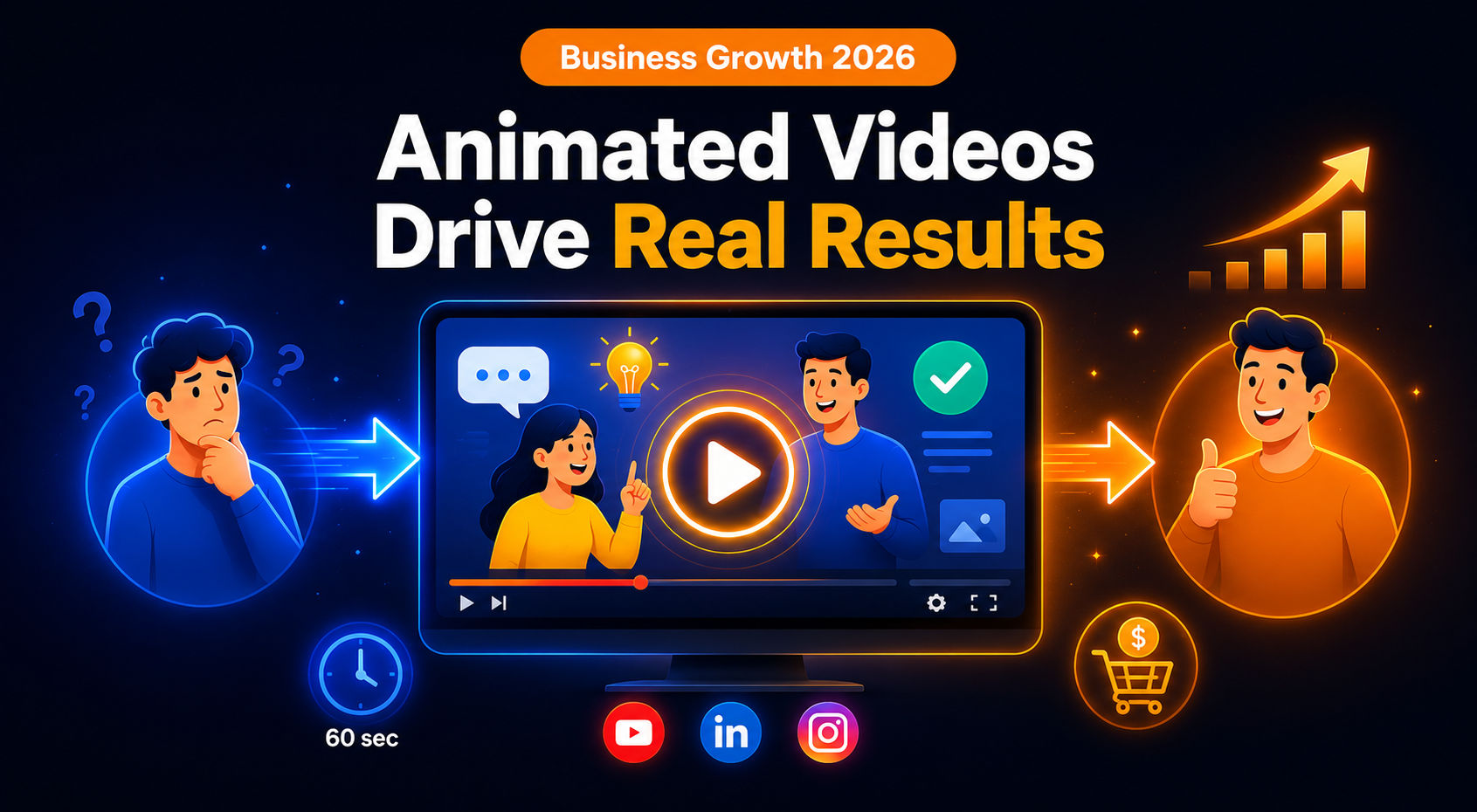
Picture this: someone lands on your website, scrolls for eight seconds, and leaves without understanding what you actually sell. It happens more than most business owners want to admit. Attention spans online are shorter than ever, and a wall of text rarely saves the day.
This is exactly the gap an animated explainer video is built to close. In the next few minutes, you'll learn why explainer videos have become a near-default tool for growing businesses, what makes one actually work, how much you should expect to invest, and how to avoid the mistakes that turn a good idea into a wasted budget. Whether you're a SaaS founder trying to explain a complex tool or a local business owner who just wants people to "get it" faster, this guide will give you a clear path forward.
What Is an Animated Explainer Video, Exactly?
An animated explainer video is a short video -usually between 60 and 120 seconds -that uses animation, voiceover, and motion graphics to explain what a business does, what problem it solves, and why someone should care. Unlike a product demo or a talking-head video, it doesn't rely on live footage or a person speaking directly to the camera. Instead, it uses visuals, characters, and storytelling to simplify ideas that might otherwise take paragraphs to explain.
Think of it as a translator. It takes something abstract -a workflow, a service, a piece of software -and turns it into something visual and easy to follow. That's the whole point: reducing the mental effort it takes for someone to understand you.
Common Types of Explainer Videos
Not every explainer video looks the same. The right style depends on your industry and your audience.
2D animated explainers – the most popular format, ideal for SaaS, apps, and service-based businesses
Whiteboard-style explainers – great for educational or step-by-step content
Motion graphics explainers – data-heavy, ideal for finance, tech, or B2B products
Character-driven explainers – useful when you want a relatable mascot or persona guiding the story
Each format serves a slightly different goal, but all of them share the same job: make complicated things simple.
Why Animated Explainer Videos Matter More in 2026
A few years ago, explainer videos were a nice-to-have. Today, they're closer to a baseline expectation, especially for businesses competing online. A few shifts have pushed this forward.
First, attention spans on websites and social platforms continue to shrink, so video does the heavy lifting that paragraphs used to do. Second, mobile browsing now makes up the majority of web traffic, and video simply performs better on a phone screen than dense blocks of text. Third, search engines increasingly favor pages with video content, since it tends to keep visitors on the page longer -a signal that matters for rankings.
None of this means written content is dead. It means video and text now work best together, with video marketing acting as the entry point and written content backing it up with depth.
The Real Business Benefits of an Animated Explainer Video
It's easy to assume an explainer video is just a "nice visual." In practice, it tends to move several business metrics at once.
It Improves Conversions on Landing Pages
When a visitor understands your offer faster, they're more likely to take the next step -whether that's signing up, requesting a quote, or making a purchase. A short video on a landing page often reduces the friction that comes from confusing copy or feature-heavy descriptions.
It Builds Trust Before a Sales Call
People buy from businesses they understand. An explainer video lets a prospect get familiar with your product or service before they ever talk to a salesperson, which shortens sales cycles and makes those conversations more productive.
It Increases Time on Page and Lowers Bounce Rate
Video naturally holds attention longer than static text. Visitors who watch even 15–20 seconds of a video are far less likely to leave immediately, which helps both engagement metrics and SEO performance.
It Travels Well Across Platforms
A well-made explainer video isn't limited to your homepage. The same asset can be repurposed for social media, email campaigns, investor pitches, trade shows, and paid ads -multiplying the return on a single production investment.
What Makes a Business Explainer Video Actually Work
Not all explainer videos perform equally. A weak script with great animation still falls flat, and a strong script with mediocre visuals can still get the job done. The difference between a forgettable video and one that drives results usually comes down to a handful of factors.
A Script That Leads With the Problem, Not the Product
The most common mistake businesses make is starting with "We are a company that does X." Strong explainer videos start with the viewer's problem, then introduce the solution. This keeps the viewer emotionally engaged instead of passively watching a feature list.
A Clear, Single Call-to-Action
A good business explainer video doesn't try to sell five things at once. It picks one outcome -sign up, book a demo, visit a page -and builds everything toward that single action.
Voiceover and Pacing That Match the Brand
Tone matters. A playful, fast-paced voiceover suits a consumer app; a calm, measured tone suits healthcare or finance. Mismatched tone is one of the fastest ways to lose viewer trust.
Visuals That Simplify, Not Decorate
Animation should clarify the message, not distract from it. Overly busy scenes or unnecessary visual flourishes can actually make a concept harder to follow rather than easier.
(Internal link opportunity: connect to a service page on Logo Animation or Motion Graphics & Animation to show how these elements work together in a full brand video strategy.)
Explainer Video Production: What the Process Actually Looks Like
One reason businesses hesitate is uncertainty about the process. Here's a simplified breakdown of how explainer video production typically works from start to finish.
Discovery and strategy – understanding the audience, goal, and core message
Scriptwriting – turning the message into a tight, conversational script (usually under 150 words for a 60-second video)
Storyboarding – mapping out scenes visually before animation begins
Voiceover recording – selecting a voice and tone that matches the brand
Animation and motion design – bringing the storyboard to life
Sound design and final edits – adding music, sound effects, and polishing transitions
Most professional explainer videos take anywhere from two to four weeks to produce, depending on complexity and revision rounds.
How Much Does an Animated Explainer Video Cost?
Pricing varies widely based on animation style, length, and complexity, but here's a general sense of what businesses typically encounter:
Simple 2D explainers: lower-cost, faster turnaround, ideal for startups and small businesses
Character-driven or custom-illustrated explainers: mid-range pricing, more production time
High-end motion graphics with complex data visualization: higher investment, often used by SaaS and finance companies
The real question isn't just "what does it cost," but "what's the cost of not having one." A confusing homepage or an unclear pitch deck quietly loses customers every single day -a cost that's harder to see but often larger over time.
Where Explainer Videos Fit Into a Bigger Video Marketing Strategy
An explainer video rarely works in isolation. It performs best as part of a broader video marketing approach that might include product demos, social ads, and customer testimonials. A typical flow looks like this:
The explainer video introduces the problem and solution (top of funnel)
A product demo video shows the tool or service in action (middle of funnel)
Customer testimonials or UGC-style content build trust (bottom of funnel)
(Internal link opportunity: link to a Demo Video or UGC Video service page here to show the natural next step after an explainer video.)
Used this way, an explainer video becomes the entry point that guides a visitor smoothly toward a decision, rather than a standalone asset sitting unused on a homepage.
Frequently Asked Questions
How long should an animated explainer video be? Most effective explainer videos run between 60 and 90 seconds. Long enough to explain the value clearly, short enough to hold attention all the way through.
Where should I use my explainer video? The homepage and landing pages are the most common spots, but explainer videos also perform well on social media, in email campaigns, and during sales presentations or pitch decks.
Do explainer videos actually improve SEO? Indirectly, yes. Video tends to increase time on page and reduce bounce rate, both of which are factors search engines consider when ranking pages.
What's the difference between an explainer video and a demo video? An explainer video focuses on the problem and the big-picture solution. A demo video shows the actual product or service in use, step by step. Many businesses use both at different stages of the buyer journey.
Can a small business afford an animated explainer video? Yes. Pricing scales with complexity, so a simple, well-scripted 2D explainer is accessible for small businesses and often delivers a strong return relative to its cost.
Final Thoughts: Is It Time for Your Business to Invest in One?
If your business has a message that takes too long to explain in writing, or a product that people tend to misunderstand at first glance, an animated explainer video is one of the more reliable ways to close that gap. It doesn't replace good copywriting or a solid website -it works alongside them, doing the part that words alone struggle with: making something complicated feel simple in under two minutes.
The businesses that get the most value from explainer videos aren't necessarily the ones with the biggest budgets. They're the ones who treat the video as a strategic tool, not a one-off creative project -with a clear goal, a focused script, and a plan for where the video will actually be used.
Ready to turn your message into a video people actually finish watching? Reach out to discuss what an animated explainer video could look like for your business, and let's build something that does more than just look good -it should actually move people to act.